
Most interesting

If you’re here, something already feels off. Maybe the spark feels gone, conversations feel shallow, or you lie awake wondering: Should we break up?
This “Should We Break Up?” quiz isn’t here to push you toward a choice. It’s here to help you step back, breathe, and see your relationship clearly, without guilt, pressure, or outside voices drowning you out. When you’re stuck between break up or stay together, emotions can cloud judgment.
Most relationships don’t collapse overnight. Problems sneak in quietly: missed emotional check-ins, repeated small arguments, trust cracks, or feeling lonely even when your partner is present. Ignoring these warning signs can make them grow into unmanageable issues.
This quiz helps you spot patterns you might be avoiding, understand what really matters, and separate passing frustrations from fundamental incompatibility. Answer honestly. No “what ifs” or “maybe later.” You can also use tools like questions to ask your partner to guide honest conversations and uncover what’s really going on. The goal isn’t to end the relationship automatically; it’s to see clearly where you stand. Because sometimes, clarity is the first step toward saving what matters, or knowing when it’s time to protect yourself and move on.
Taking a Relationship Problems Quiz: Why It Matters
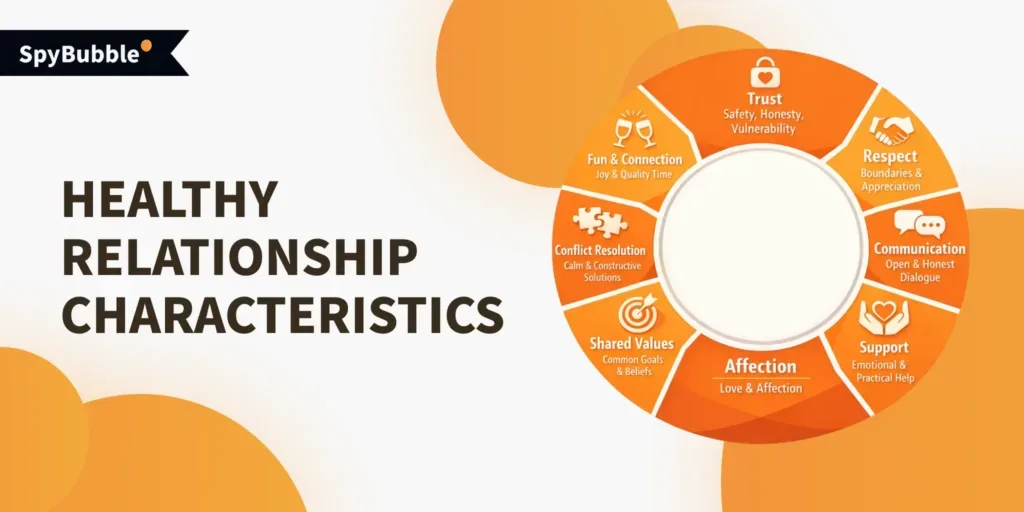
When emotions run high, logic tends to disappear. That’s why a relationship problems quiz can be useful. It creates distance between how you feel in the moment and what’s actually happening over time. Arguments after a bad day don’t always mean incompatibility. But constant tension, lack of effort, or emotional withdrawal often point to deeper relationship compatibility issues. A quiz forces you to look at patterns instead of isolated fights.
It also helps answer a hard question most people avoid: Are you staying because you’re happy or because it’s familiar? If you’re constantly wondering “is my boyfriend cheating” or trying to figure out “how to tell if your girlfriend is cheating”, your gut is already sending signals. Being honest with yourself now can save months or even years of confusion later.

Thinking “Should We Break Up?”
Try SpyBubble to know the truth and decide on this question.
The Relationship Quiz: 20 Questions About Your Future Together
Feeling unsure about your relationship? The Should We Break Up Quiz helps you see patterns clearly and decide whether it’s time to move on. By answering 20 honest questions, you’ll gain insight into your emotions, communication, and trust, helping you understand when to end a relationship or work on it.
Do you enjoy spending time with your partner?
- A. No, it feels draining, and you often feel exhausted afterward.
- B. Sometimes, but often not, and your enjoyment can be inconsistent.
- C. Yes, genuinely, and you usually feel happy and fulfilled together.
When problems come up, you usually feel:
- A. Hopeless, and you often think things can’t be fixed.
- B. Unsure, and you’re not sure how to handle the situation.
- C. Motivated to fix them, and you’re willing to work through issues.
How do you feel after spending time together?
- A. Worse, you often feel more stressed or down afterward.
- B. Neutral, and your feelings are mixed or unchanged.
- C. Better, and you generally feel uplifted and positive.
Do you feel emotionally safe being honest?
- A. No, and you worry about being judged or dismissed.
- B. Sometimes, and it depends on the situation.
- C. Yes, and you feel comfortable sharing your true feelings.
How often do you argue about the same things?
- A. Constantly, the same issues keep coming up.
- B. Occasionally, these arguments happen, but not all the time.
- C. Rarely, and you don’t frequently revisit the same conflicts.
Do you trust your partner?
- A. Not really, and trust is a significant concern.
- B. Mostly, trust is generally stable but not perfect.
- C. Fully, and you have a strong sense of trust and security.
When you imagine your future:
- A. They’re not in it, and you see a life without them.
- B. You’re unsure, and you’re uncertain about their role.
- C. They’re clearly there, and you envision a future together.
How do they react when you’re upset?
- A. Dismissive, and they often ignore or downplay your feelings.
- B. Inconsistent, and their response varies from time to time.
- C. Supportive, and they comfort and validate your emotions.
Do you feel respected?
- A. Rarely, and you often feel undervalued or overlooked.
- B. Sometimes, respect is given occasionally.
- C. Yes, and you feel consistently valued and respected.
Are you still attracted to them?
- A. No, and you no longer feel a romantic connection.
- B. Unsure, and your attraction is inconsistent.
- C. Yes, and you still feel a strong attraction.
Do you feel like yourself around them?
- A. No, and you often feel you have to hide your true self.
- B. Sometimes, you occasionally feel authentic.
- C. Yes, and you feel comfortable being yourself.
Do conflicts get resolved?
- A. Never, and conflicts rarely end in a resolution.
- B. Occasionally, resolutions happen, but not always.
- C. Usually, and conflicts tend to be resolved fairly and constructively.
Are you growing together?
- A. No, and you feel you’re drifting apart.
- B. Unsure, and it’s unclear if you’re evolving as a couple.
- C. Yes, and you feel that you’re both growing and improving together.
Do you feel listened to?
- A. Rarely, and you often feel ignored or dismissed.
- B. Sometimes, you’re heard occasionally.
- C. Often, you feel genuinely listened to and understood.
How often do you feel lonely in the relationship?
- A. Often, loneliness is a frequent feeling.
- B. Sometimes, you occasionally feel isolated.
- C. Rarely, and you mostly feel connected and supported.
Do you avoid tough conversations?
- A. Always, and you often steer clear of difficult topics.
- B. Sometimes, you occasionally avoid them.
- C. No, and you’re willing to tackle tough conversations head-on.
Do you feel valued?
- A. No, and you often feel unappreciated.
- B. Occasionally, you feel valued now and then.
- C. Yes, and you feel consistently appreciated and respected.
Do you trust their behavior when you’re not around?
- A. No, and you’re worried about what they do in your absence.
- B. Not always, and trust can be inconsistent.
- C. Yes, and you have confidence in their actions and integrity.
Do you feel hopeful about the relationship?
- A. No, and you feel pessimistic about the future.
- B. Unsure, and your outlook is mixed or uncertain.
- C. Yes, and you feel optimistic and positive about what’s ahead.
Deep down, your gut says:
- A. It’s over, and you feel that the relationship is ending.
- B. I don’t know, and you’re uncertain about the future.
- C. It’s worth fighting for, and you believe in the relationship’s potential.
Your Results: When to End a Relationship
Mostly A’s – Should I Break Up With My Boyfriend/Girlfriend? Yes, It’s Time
When to end a relationship? If most of your answers are A’s, this relationship is likely draining you more than it supports you. When you’re constantly questioning whether to break up or stay together, it usually means something essential is missing.
You may feel emotionally alone even when you’re together. You might walk on eggshells, avoid saying what you really think, or feel anxious about upsetting them. If the question “should I break up with my boyfriend” or “should I break up with my girlfriend” keeps popping into your head, that’s not random. It’s your intuition asking to be taken seriously.
Low relationship compatibility often shows up as chronic tension, mismatched values, or feeling unseen. Love shouldn’t feel like survival mode. Ending a relationship doesn’t mean you failed or didn’t try hard enough. Sometimes it means you’re choosing emotional safety over staying stuck in a cycle that keeps hurting you.
Mostly B’s – Work Needed: Give It One More Real Try
If your results are mostly B’s, you’re standing in the middle, not miserable, but not fulfilled either. You still care, but something feels off, and you can’t ignore it anymore.
This stage calls for action. Pay attention to what’s actually happening, not what you wish would happen. Are problems being discussed and worked on or just talked about and forgotten? Are apologies followed by real change, or does everything reset after a few weeks?
This is the moment to speak honestly, set clear boundaries, and see how your partner responds. Real effort must come from both sides. If only one person is carrying the emotional load, the imbalance will eventually decide for you. A relationship can survive hard conversations, but it can’t survive silence, avoidance, or one-sided effort. Clarity comes quickly once you stop accepting “almost.”
Mostly C’s – Healthy Foundation: Don’t Let Doubts Win
Mostly C’s suggest your relationship has a solid base, even if things feel shaky right now. Doubt doesn’t always mean something is wrong. Sometimes it means something needs attention.
If you still feel respected, emotionally safe, and valued most of the time, that matters. Healthy relationships aren’t perfect; they’re responsive. Problems get addressed, not ignored. Conversations may be uncomfortable, but they don’t turn into power struggles or emotional shutdowns.
Before asking yourself whether to break up or stay with your partner, ask something simpler: Do we still try? If both of you are willing to communicate, repair, and show up, that’s a strong sign this is a rough patch, not the end. Focus on reconnecting, improving communication, and addressing small issues before they grow.
Relationship Problems Quiz Results: Understanding What You Learned
This “Should We Break Up?” quiz isn’t here to tell you what to do or push you toward a breakup. It’s here to help you see what’s already happening – clearly, without excuses or panic. When emotions run high, it’s easy to cling to promises, apologies, or “what it used to be.” But in real life, patterns matter more than words. Consistency matters more than intentions.
If you’re stuck asking yourself whether to break up or stay together, that uncertainty is information. Healthy relationship compatibility feels steady, safe, and mutual. You don’t feel confused all the time. You’re not constantly guessing where you stand or walking on eggshells.
This “Should We Break Up?” quiz helps you step back and look at the full picture: how you communicate, how conflict is handled, and how you feel most days, not just on the good ones. Clarity doesn’t mean rushing a decision. It means stopping the cycle of doubt.
Red Flags You Shouldn’t Ignore in a Relationship
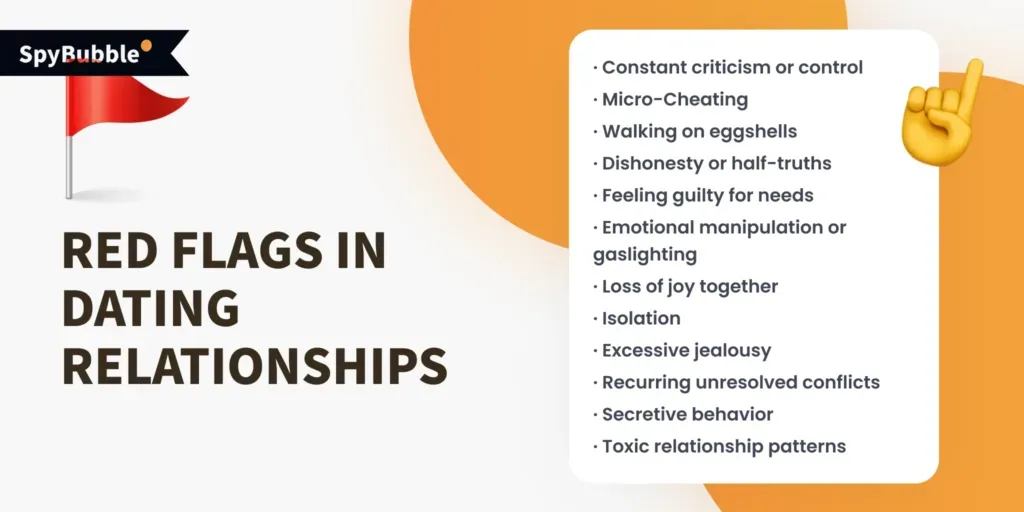
If you’re noticing secrecy, sudden distance, or unexplained behavior, your gut might be telling you something is off. For example, checking signs of cheating in a relationship can help you know whether patterns of dishonesty or emotional distance are serious.
Watch for these patterns:
- Your partner regularly points out flaws or tries to control choices, leaving you doubting yourself.
- Micro-cheating signs, such as flirtatious messages outside the relationship
- You feel tense, avoiding topics or opinions just to prevent fights.
- Dishonesty or half-truths is another red flag. Stories don’t add up, and trust feels shaky.
- You feel selfish for expressing needs or setting boundaries.
- Emotional manipulation or gaslighting in relationships.
- Moments together feel forced; laughter and comfort are rare.
- Constant criticism or controlling behavior (toxic relationship signs)
- You notice a growing distance from friends, family, or your own hobbies because of the relationship.
- Excessive jealousy.
- Arguments keep happening over the same issues with no resolution in sight.
- Secretive apps or accounts – see what chat apps do cheaters use for more info.
Healthy relationships include care, respect, and effort, even during disagreements. If these patterns feel familiar, your gut is telling you something important. Facing the truth now can save years of emotional strain and help you decide whether to repair the bond or take a step back.
Is My Boyfriend/Girlfriend Cheating? Trust Your Instincts
When doubts start creeping in, they rarely come out of nowhere. If you’re asking yourself whether your partner might be cheating, it’s usually because something feels off. Changes in behavior, sudden secrecy, emotional distance, or defensiveness can trigger that uneasy feeling in your gut. And while instinct alone isn’t proof, it shouldn’t be ignored either.
Trust your instincts, but don’t let them run wild. Anxiety can blur reality, especially if you’re already feeling insecure or disconnected. The key is to look for patterns, not single moments. One late reply doesn’t mean much. Repeated late nights, hidden phone activity, or vague explanations do.
If you’re stuck wondering “should I break up with my boyfriend?” or “should I break up with my girlfriend?”, clarity matters. Instead of confronting without facts or staying silent out of fear, pause, observe, and ground your feelings in reality. Knowing what’s actually happening helps you decide your next move calmly, not emotionally.
SpyBubble: Get Clarity on Trust Issues
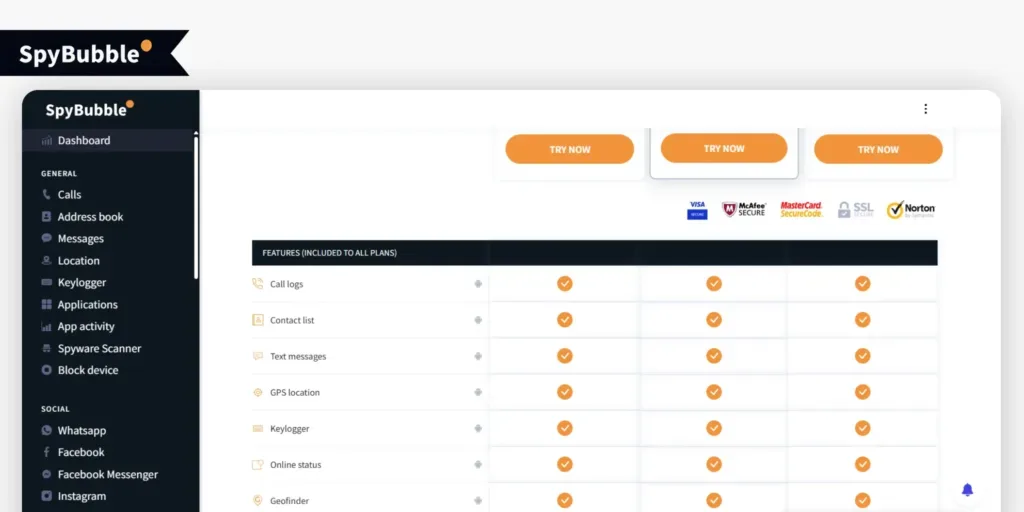
When there are trust issues in relationships, guessing only makes things worse. Doubt has a way of eating at you. You replay conversations, overanalyze small changes, and second-guess your own instincts. That constant mental noise can be exhausting. SpyBubble is meant to help quiet that chaos by replacing suspicion with clear facts, discreetly and responsibly.
This isn’t about controlling your partner or looking for reasons to leave. It’s about clarity. SpyBubble gives you a clearer picture of what’s really happening so you can make decisions without fear of running the show.
Key features for dating couples include:
- Text message monitoring, so you can see patterns of communication, not just one message taken out of context
- Social media activity tracking, which helps uncover hidden conversations or sudden changes in behavior
- Dating app detection, useful if you suspect your partner might still be acting single
- Location tracking, to understand routines and spot unexplained gaps
- Call log access, showing who they’re in frequent contact with and when
These tools are especially helpful in serious or long-term relationships, where deciding to walk away or stay is a life-changing choice.
Whether the facts confirm your fears or ease them, clarity puts the power back in your hands.

Check your partner with SpyBubble monitoring app
SpyBubble gives you a clearer picture of what’s really happening so you can make decisions without fear of running the show.
How to Have the “Should We Break Up” Conversation
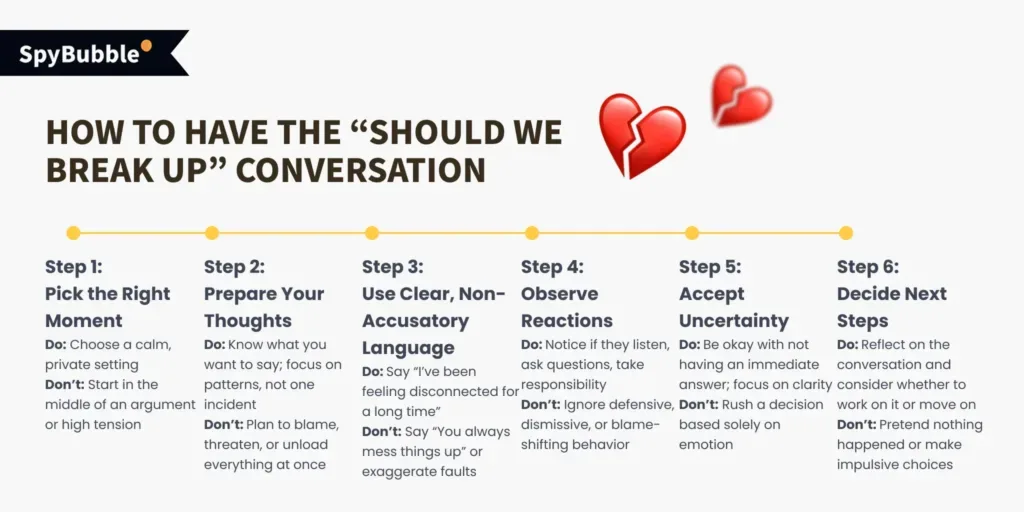
Starting a breakup conversation is scary, but avoiding it usually makes things worse. If you’re already taking a “Should We Break Up?” quiz, part of you knows the talk needs to happen. The goal isn’t to win, accuse, or unload everything at once. It’s to get clarity.
Pick a calm moment, not the middle of a fight. Go in knowing what you want to say and what you don’t want to do: blame, threaten, or reopen old wounds just to hurt. Focus on patterns, not one bad argument. Say things like, “I’ve been feeling disconnected for a long time,” instead of “You always mess things up.”
Pay close attention to how your partner reacts. Do they listen, ask questions, and take responsibility or get defensive, dismissive, or turn it back on you? Actions matter more than promises in moments like this.
It’s okay if the conversation doesn’t end with a clear answer. Sometimes the purpose is simply to stop pretending everything is fine. Whether you decide to break up or try again, having an honest conversation helps you move forward without regret.
Conclusion
Only you can decide what’s right for your relationship. This “Should We Break Up?” quiz isn’t here to push you toward staying or leaving. It’s here to help you stop guessing and start listening to yourself.
Whether you choose to work things out or walk away, the right choice is the one that protects your self-respect and emotional health. Staying out of fear can be just as painful as leaving too soon. Trust the patterns you’ve noticed, not just the hope that things might magically change.
Clarity isn’t cold or selfish. It’s honest. And honesty is what lets you move forward without regret.
If trust has been damaged or doubts won’t quiet down, having real information matters. Tools like SpyBubble can help you make decisions with your eyes open, not your heart racing.
Whatever you decide, choose the path that lets you breathe again.

New posts


Most interesting
Leave a reply