

Most interesting

Are you searching for “Is he cheating on me” quiz on Google at 2 a.m? Doubt rarely explodes out of nowhere. It creeps in quietly. A phone that never leaves his hand. Notifications, he suddenly hides. A tone that feels colder than before. A shift you can’t explain, but can’t ignore either.
At first, you tell yourself you’re overthinking. But then the questions keep coming. Why is he so protective of his phone? Why does he get irritated when you ask simple things? Why do you feel uneasy even when everything looks “normal”? Over time, these moments turn into sleepless nights, stress, depression, emotional exhaustion, and deep trust issues in relationships.
The “Is he cheating on me quiz” is here to help you solve this problem. Instead of accusing, guessing, or doubting, it gives you a structured way to look at potential cheating signs and understand whether what you’re feeling is anxiety or a response to real, repeated behavior. It helps you notice patterns, emotional shifts, and behaviors that may point to deeper trust relationship issues or reassure you that your relationship is more stable than it feels.
Answer honestly and without judgment. You’re not “crazy,” insecure, or dramatic for wanting answers. Wanting the truth is normal. This quiz is a starting point, not to create fear, but to bring clarity. Ready to start?
Why Take a Cheating Quiz?
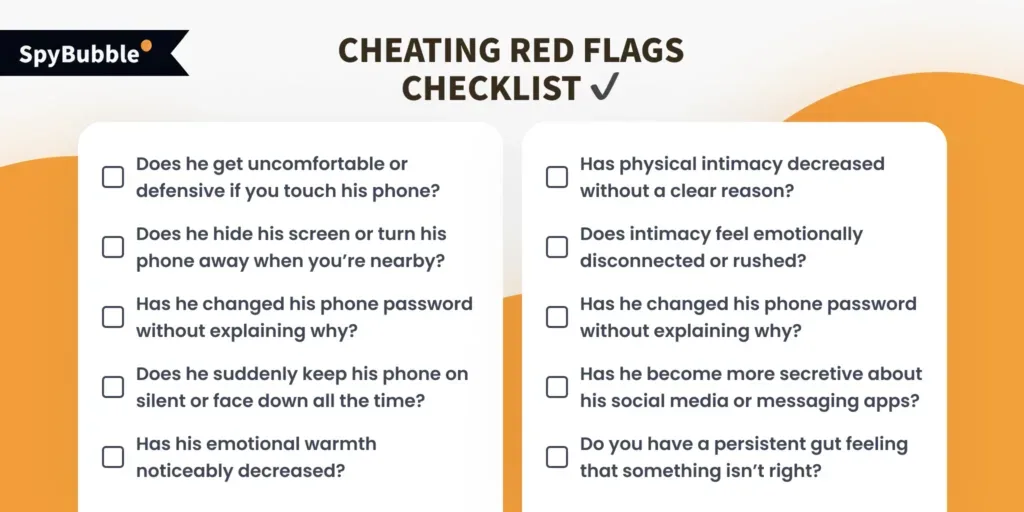
Taking a cheating quiz helps remove some of the emotional fog that often surrounds relationship doubts. When feelings run high, it’s easy to confuse anxiety with intuition or dismiss real relationship red flags as “nothing.” A structured quiz creates space for honest reflection.
A good cheating quiz helps you identify patterns instead of isolated moments. One late night at work might mean nothing, but repeated secrecy, emotional distance, and defensiveness together can tell a different story. This quiz is especially helpful if you’re struggling with ongoing trust issues in relationships and don’t know whether your concerns are justified.
By answering clear, direct questions, you can separate paranoia from legitimate worries. Think of this cheating quiz as a reality check: one that helps you decide whether to focus on communication, set boundaries, or seek clarity through other means.

Find the truth with SpyBubble
SpyBubble cell phone tracker exists to support truth, not fear. You deserve honesty, transparency, and peace of mind.
The Quiz: 20 Questions to Evaluate Your Relationship
How to tell if someone is cheating? Below is the “Is he cheating on me quiz” you’ve been looking for. Answer each question honestly with Yes or No. Don’t overanalyze.
1. Does he hide his screen or turn his phone away when you’re nearby?
- A. Often, he quickly turns the screen away or tilts his phone whenever you come close.
- B. Sometimes, he does this occasionally, usually when he seems distracted or stressed.
- C. Rarely does he use his phone openly around you without changing his behavior.
2. Does he get uncomfortable or defensive if you touch his phone?
- A. Yes, he reacts sharply or panics when you even reach toward his phone.
- B. Occasionally, he seems uneasy but brushes it off with an excuse.
- C. No, he stays calm and doesn’t act threatened by you touching it.
3. Has he become emotionally distant while insisting that nothing is wrong?
- A. Yes, he feels emotionally closed off, but keeps saying everything is “fine.”
- B. Sometimes, he pulls back emotionally but eventually opens up a little.
- C. No, his emotional availability feels consistent and genuine.
4. Has he changed his phone password without explaining why?
- A. Yes, he changed it suddenly and avoids explaining the reason.
- B. He changed it but gave a vague or practical explanation.
- C. No, his phone security hasn’t changed in a secretive way.
5. Does he suddenly keep his phone on silent or face down all the time?
- A. Yes, his phone is almost always silent or face down now.
- B. Sometimes, he does this, but not consistently.
- C. No, his phone habits haven’t noticeably changed.
6. Does he avoid meaningful conversations that you used to have regularly?
- A. Yes, he shuts down or deflects whenever conversations get personal.
- B. Sometimes, he avoids them but will talk if pushed.
- C. No, he still engages in meaningful conversations with you.
7. Has his emotional warmth noticeably decreased?
- A. Yes, he feels colder, less affectionate, or emotionally absent.
- B. Occasionally, he seems distant, but not all the time.
- C. No, his warmth and affection feel steady.
8. Has his daily routine or schedule become unpredictable without explanation?
- A. Yes, his schedule has changed a lot with little clarity.
- B. Some changes happened, but they mostly make sense.
- C. No, his routine is fairly predictable and transparent.
9. Does he often say he’s “busy” but give vague details about where he’s been?
- A. Yes, his explanations are unclear and don’t fully add up.
- B. Sometimes, details are vague but not always concerning.
- C. No, he’s usually clear about how and where he spends his time.
10. Do his stories about his whereabouts sometimes change or not fully add up?
- A. Yes, details shift or contradict themselves over time.
- B. Occasionally, small inconsistencies appear.
- C. No, his stories are consistent and believable.
11. Has physical intimacy decreased without a clear reason?
- A. Yes, intimacy has dropped, and he avoids talking about it.
- B. It’s decreased slightly, but there are understandable reasons.
- C. No, physical intimacy feels normal and mutual.
12. Or has intimacy suddenly increased in a way that feels unusual or forced?
- A. Yes, it feels excessive or out of character, almost compensating.
- B. There’s been a slight increase, but it feels natural.
- C. No, intimacy hasn’t changed strangely.
13. Does intimacy feel emotionally disconnected or rushed?
- A. Yes, it feels mechanical or emotionally distant.
- B. Sometimes, the emotional connection feels weaker than before.
- C. No, intimacy still feels emotionally connected.
14. Does he get defensive or irritated when you ask simple, reasonable questions?
- A. Yes, he reacts with anger or shuts the conversation down.
- B. Sometimes, he gets defensive but eventually explains.
- C. No, he answers calmly without making you feel wrong.
15. Does he accuse you of being jealous or overthinking instead of reassuring you?
- A. Yes, he regularly dismisses your concerns and turns them against you.
- B. Occasionally, he does this, but also reassures you at times.
- C. No, he listens and tries to make you feel secure.
16. Has he stopped sharing details about his day or personal life?
- A. Yes, he keeps his daily life vague and closed off.
- B. Sometimes, he shares less than before.
- C. No, he still openly shares his experiences with you.
17. Has he become more secretive about his social media or messaging apps?
- A. Yes, he guards his accounts and hides activity.
- B. There’s been some change, but not extreme secrecy.
- C. No, his online behavior feels normal and open.
18. Has he stopped posting to you, tagging you, or acknowledging the relationship online?
- A. Yes, your presence has noticeably disappeared from his social media.
- B. Posting has decreased, but not entirely.
- C. No, he still acknowledges the relationship publicly.
19. Do you have a persistent gut feeling that something isn’t right?
- A. Yes, the feeling doesn’t go away even when things seem calm.
- B. Sometimes, doubts come and go.
- C. No, you generally feel secure and at ease.
20. Even when things seem “fine,” do you still feel uneasy or anxious?
- A. Yes, anxiety lingers beneath the surface.
- B. Occasionally, but it’s not constant.
- C. No, you feel relaxed and emotionally safe.
Your Results: What Your Answers Mean
Rarely does he use his phone openly around you without changing his behavior.
Understanding your answers helps you interpret possible signs of cheating without panic.
15-20 “Yes” Answers – High Alert: Significant Signs of Cheating Present
Scoring this high means multiple cheating husband signs are showing up consistently. Phone secrecy, emotional distance, and defensiveness rarely appear together by accident. These are strong indicators that something deeper is happening.
At this stage, denial only creates more anxiety. You’re not imagining patterns. You’re noticing repeated behavior shifts. Many people in this category feel exhausted, hyper-aware, and emotionally disconnected. That’s your intuition asking for clarity.
This doesn’t mean confrontation should be aggressive. It means it’s time to seek facts. Some choose open communication; others need evidence to feel grounded before talking. When emotions are high, verified information can help you catch a cheater without drama.
8-14 “Yes” Answers – Caution: Some Concerning Patterns
This score suggests mixed signals. Some behaviors might be harmless – stress, work pressure, or personal struggles – but others raise genuine relationship red flags. You may notice sudden secrecy, unexplained phone habits, or subtle changes in affection that leave you second-guessing everything. This gray zone is one of the most emotionally confusing places to be, where doubt and intuition collide.
You might feel torn between trusting him and trusting yourself, constantly replaying past interactions in your head. Every vague excuse, every skipped detail can feel like a mini alarm. Ignoring this uncertainty can slowly erode your emotional safety. Instead of assuming the worst, watch for patterns: Are these behaviors consistent, or just temporary slips? Small changes repeated over time often reveal more than big isolated incidents.
Now is the moment where communication is key. Ask questions calmly and clearly, without judgment or anger, but also respect his boundaries. Speak from your heart. Explain how his behavior makes you feel, without blaming. Sharing your perspective openly can illuminate patterns, reduce anxiety, and either reassure you or confirm your concerns.
0-7 “Yes” Answers – Low Concern: Relationship Appears Stable
A low score is a relief – there’s little evidence suggesting infidelity. While no relationship is perfect, most behaviors you notice may be tied to stress, routine shifts, or life pressures rather than secret cheating. Yet even when the “red flags” are minimal, your feelings are valid. Emotional distance, subtle coldness, or small irritations still deserve attention. Ignoring them can slowly chip away at closeness.
This is the stage to strengthen the connection before small issues grow. Instead of silently worrying, have open, honest conversations. Share your feelings, explain your perspective, and invite him to share his. If needed, ask for professional assistance (therapy).
Even without obvious signs of infidelity, paying attention to your intuition and nurturing transparency keeps trust alive. Healthy relationships thrive on reassurance, emotional availability, and small daily acts that confirm you’re seen, heard, and valued.
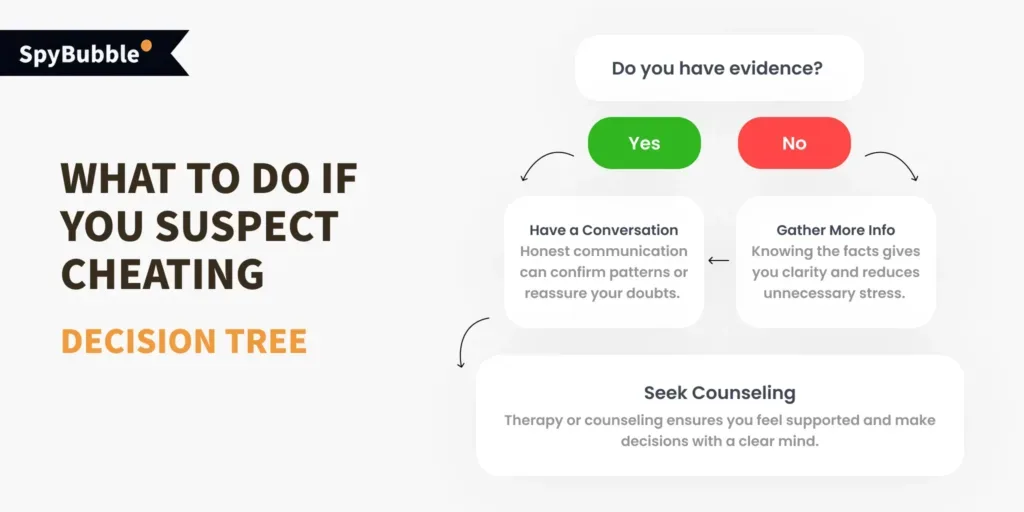
How to Catch a Cheater: Next Steps After the Quiz
Finishing the “Is he cheating on me?” quiz can leave your mind spinning. You might find yourself replaying cheating spouse text messages, rereading old conversations, or analyzing every late-night excuse. That sinking feeling in your chest, the knot of doubt you can’t shake – it’s normal. But before reacting in anger or panic, it’s crucial to slow down and take thoughtful, grounded steps.
- First, observe patterns, not single incidents. One late night or one strange text doesn’t prove anything. Cheating usually shows up as repeated behavior: secrecy, emotional distance, or sudden routine changes. This is how you separate stress-related behavior from real warning signs. Many people miss this step and either accuse too early or ignore clear signals for too long.
- Second, check communication quality. Ask calm, specific questions. Not accusations. Questions. Honest partners usually explain without anger. If answers are vague, defensive, or turn into blame, that’s often more telling than the words themselves. This is one of the clearest ways to understand how to tell if someone is cheating without escalating conflict.
- Third, trust your intuition, but back it with facts. A strong gut feeling he’s cheating rarely comes from nowhere, but feelings alone can cause anxiety. That’s why verification matters. Many people uncover the truth through patterns in cheating partner messages, hidden apps, or unexplained call activity. Learning what chat apps do cheaters use can also explain sudden phone secrecy.
- Finally, protect yourself emotionally. If honesty isn’t given freely, it’s reasonable to look for clarity. Some people need proof before confronting; others need peace of mind to move forward. Either way, the goal isn’t revenge. It’s true. Knowing where you stand allows you to decide your next move with confidence, not fear.
SpyBubble: Get the Clarity You Deserve

If this “Is he cheating on me” quiz left you feeling anxious instead of relieved, that reaction is completely valid. Many people finish a cheating quiz hoping for clarity, but walk away with more questions. Living in uncertainty is one of the hardest emotional states because it drains your energy, fuels overthinking, and slowly creates distance from your own intuition.
SpyBubble is designed specifically for people in this emotional space, not to create fear, but to end it.
Here’s how SpyBubble helps when doubt is taking over:
- Instead of replaying conversations in your head or checking his mood for clues, SpyBubble provides you with real information. Facts stop the endless mental loops that come with suspicion and emotional exhaustion.
- SpyBubble lets you track your boyfriend‘s text activity, helping identify sent, received, and even deleted chats. See when every message was shared and with whom they communicate the most.
- Repeated calls to unknown numbers, sudden increases in call frequency, or late-night communication often explain why behavior feels “off.” Seeing call data can either confirm concerns or finally put them to rest.
- When stories don’t match actions, location data provides clarity. This isn’t about control. It’s about protecting yourself from emotional manipulation and restoring a sense of stability.
- Many affairs now happen through DMs and lesser-known platforms. SpyBubble helps you understand activity across apps, especially if phone secrecy has increased or privacy settings suddenly changed.
- There’s no confrontation, no accusations, and no pressure to act immediately. You gather information quietly, process it at your own pace, and decide your next steps when you’re ready.
- Constant doubt damages confidence, sleep, and emotional health. Whether SpyBubble confirms infidelity or proves your fears wrong, knowing the truth allows you to breathe again.
Checking for infidelity isn’t about paranoia. It’s about self-protection. Living in uncertainty hurts far more than facing reality. SpyBubble exists to help you move from emotional chaos to clarity.
Conclusion
This “Is he cheating on me?” quiz isn’t a verdict. It’s a starting point. Whether your results showed high concern or low risk, your feelings are valid, and your need for clarity matters.
Trusting your instincts doesn’t mean jumping to conclusions. It means listening to yourself and choosing tools that protect your peace. When questions appear, answers bring relief.
SpyBubble exists to support truth, not fear. You deserve honesty, transparency, and peace of mind.

New posts

Most interesting
Leave a reply