

Most interesting

Feeling stuck in a marriage that drains you can be exhausting and heartbreaking. Maybe you lie awake replaying fights, wondering if you’re just overreacting, or imagining life without your spouse and feeling a strange sense of relief. These thoughts aren’t selfish. They’re your mind signaling that something isn’t right.
Thinking about divorcecan feel like walking a tightrope over a canyon – one wrong step, and fear takes over. Many people in this situation are considering divorce but are afraid to admit it, worried about what friends, family, or even their own hearts might think. It’s normal to feel guilty, anxious, or confused about what to do next.
The “Do I Want a Divorce” quiz isn’t about blaming your partner or labeling your marriage. This “Do I Want a Divorce” quiz is designed to help you face those feelings head-on and see your relationship clearly. It’s about giving you honest insight into your emotions, the patterns in your relationship, and whether a divorce decision is on the horizon. By answering 20 straightforward questions, you’ll uncover whether your doubts are just temporary frustrations, signs of trust issues or emotional affairs, or warnings that your marriage may truly be over.
If you’re sensing distance, constant tension, or secretive behavior, the “Do I Want a Divorce?” quiz will help you confront reality instead of burying your gut feelings. Facing the truth now, even when it hurts, can save years of heartbreak, confusion, and regret.
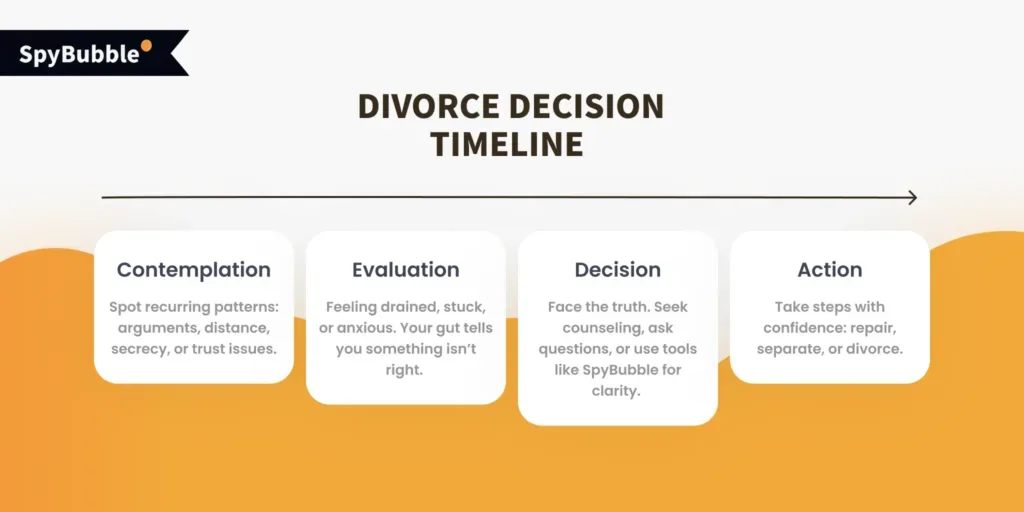
Why Thinking About Divorce Deserves Honest Self-Assessment
Making a decision about divorce is serious and deserves careful, honest reflection. Life pressures, stress, and temporary conflicts can cloud your judgment, but ignoring persistent issues can make problems worse. A structured approach helps separate passing frustration from signs that your marriage is no longer working.
Is divorce right for me? Should I divorce my wife or should I divorce my husband? When you’re thinking about divorce, consider patterns, not just isolated events. Repeated dishonesty, emotional withdrawal, or recurring conflict are strong signals. Understanding these patterns early allows you to make informed decisions, rather than acting out of fear or impulse.
Taking a “Do I Want a Divorce” quiz gives you a safe space to evaluate your feelings objectively. It can highlight areas of concern, uncover recurring patterns, such as gaslighting in relationships, or help you recognize that certain conflicts are repairable with communication and effort. Whether you choose counseling, rebuilding trust, or eventually moving on, clarity is your first-aid kit for protecting emotional well-being.

The Divorce Clarity Quiz: 20 Essential Questions
Answer these 20 A/B/C questions of this “Do I Want a Divorce” quiz honestly. There are no right or wrong answers, just your feelings and observations. Once you answer them, it will be easier for you to catch a cheating husband/wife.
1. When you imagine your life five years from now:
- A. You only feel peace if your spouse isn’t there, and you can’t envision a future together.
- B. You could see it either way, and you’re unsure how they fit into your plans.
- C. You hope they are there and things improve, and you envision a positive future together.
2. How often do you feel emotionally connected?
- A. Rarely or never, and you often feel distant or disconnected.
- B. Sometimes, your emotional connection can be inconsistent.
- C. Most of the time, you generally feel close and understood.
3. How do you handle conflicts?
- A. Avoid or escalate them frequently, and conflicts often remain unresolved.
- B. Sometimes calm, sometimes not, and your approach varies.
- C. Usually resolved together, and you find solutions through discussion.
4. How often do you feel appreciated?
- A. Almost never, and you often feel taken for granted.
- B. Occasionally, you receive appreciation now and then.
- C. Regularly, you feel valued and acknowledged.
5. Intimacy in your marriage is:
- A. Almost nonexistent, and you rarely experience closeness.
- B. Inconsistent, and intimacy is hit or miss.
- C. Healthy and regular, and you feel connected.
6. How often do you argue over repeated issues?
- A. Constantly, the same issues keep resurfacing.
- B. Sometimes, these arguments occur, but not all the time.
- C. Rarely, and you don’t frequently revisit the same conflicts.
7. Do you feel your spouse understands you?
- A. Rarely, and you often feel misunderstood.
- B. Occasionally, understanding happens now and then.
- C. Often, you generally feel understood and heard.
8. How often do you feel lonely even when together?
- A. Most of the time, you often feel isolated.
- B. Sometimes, loneliness can creep in occasionally.
- C. Rarely, and you mostly feel connected and supported.
9. Do you share major decisions?
- A. Rarely or never, and decisions are often made independently.
- B. Sometimes, you occasionally collaborate on important choices.
- C. Always, and you make major decisions as a team.
10. Do you feel fully able to trust your spouse?
- A. Not at all, and trust is a significant concern.
- B. Sometimes, trust fluctuates depending on the situation.
- C. Completely, and you have a strong sense of trust.
11. How often do you fantasize about life without them?
- A. Frequently, you often imagine being apart.
- B. Occasionally, thoughts of separation cross your mind occasionally.
- C. Rarely, and you generally envision life together.
12. How honestly do you discuss feelings?
- A. Rarely, and open communication is scarce.
- B. Sometimes, you have honest discussions, but not consistently.
- C. Regularly, you often share your feelings openly.
13. Do conflicts get resolved fairly?
- A. Almost never, and conflicts rarely end in a fair resolution.
- B. Sometimes, fair resolutions happen occasionally.
- C. Usually, conflicts tend to be resolved fairly.
14. How often does your spouse support your goals?
- A. Rarely, and support is infrequent.
- B. Occasionally, you receive encouragement now and then.
- C. Frequently, you feel consistently supported.
15. How hopeful are you about the marriage’s future?
- A. Not at all, and you feel pessimistic about what’s ahead.
- B. Uncertain, and your outlook is mixed or unsure.
- C. Very hopeful, and you feel optimistic and positive about the future.
16. How often do you feel your spouse is emotionally distant?
- A. Constantly, you feel a consistent emotional gap.
- B. Sometimes, an emotional distance can appear occasionally.
- C. Rarely, and you generally feel emotionally connected.
17. How secure do you feel in your relationship?
- A. Not secure, and you often feel anxious or uncertain.
- B. Sometimes secure, and your sense of security fluctuates.
- C. Very secure, and you feel confident and safe.
18. How often do you ask yourself: “Is divorce right for me?”
- A. Frequently, thoughts of separation are common.
- B. Occasionally, you consider it now and then.
- C. Rarely do thoughts of ending the marriage cross your mind.
19. Has infidelity been a concern?
- A. Yes, strong suspicion, and you have significant doubts.
- B. Maybe, minor signs, and there are occasional red flags.
- C. No, never, and you trust your spouse completely.
20. How safe do you feel emotionally in your marriage?
- A. Unsafe, and you often feel vulnerable or anxious.
- B. Sometimes uneasy, and your emotional safety can fluctuate.
- C. Safe, and you generally feel emotionally secure and supported.
Your Results: Is Divorce Right for Me?
Mostly A’s – Should I Divorce My Husband/Wife? You’ve Likely Already Decided
A high number of A’s shows multiple warning signs your marriage is over. Emotional disconnection, recurring conflict, faded intimacy, and persistent doubts suggest it’s time to seriously evaluate your next steps. Key signals to consider are feeling drained or hopeless daily, repeated dishonesty, emotional or verbal abuse, manipulation, or gaslighting in relationships.
At this stage, carefully gather facts, consider professional guidance, and document patterns. Tools like SpyBubble can help verify fidelity or other concerning behavior before making a divorce decision or help you find the answer to the main question: “Should I divorce my wife/husband?” by giving you insights and suggesting the right questions to ask your unfaithful spouse.
Mostly B’s – Genuinely Uncertain: You Need More Information
If B’s dominate your answers, your feelings are conflicted. You may be thinking about divorce but still have hope, or you might be weighing temporary dissatisfaction versus deeper issues.
Pay attention to patterns over time. Are disagreements repeated or situational? Are emotional distance or intimacy issues persistent? Honest communication is key: share feelings without blame and observe your spouse’s response.
Watch for signs of emotional affairs or small but repeated trust issues. Document behaviors and consider counseling before making any decisions.
Mostly C’s – You Want the Marriage to Work
C’s show your marriage has a solid foundation despite rough patches. Disagreements, temporary distance, and stress are normal in long-term relationships.
Focus on open communication, rebuilding intimacy, and prioritizing connection. Address minor issues early before they snowball into major conflicts. Counseling or workshops may help strengthen skills and repair small cracks before they turn into larger problems.
Your instinct tells you that the marriage can improve. Listen to it. Temporary frustrations don’t equal the end of a relationship.
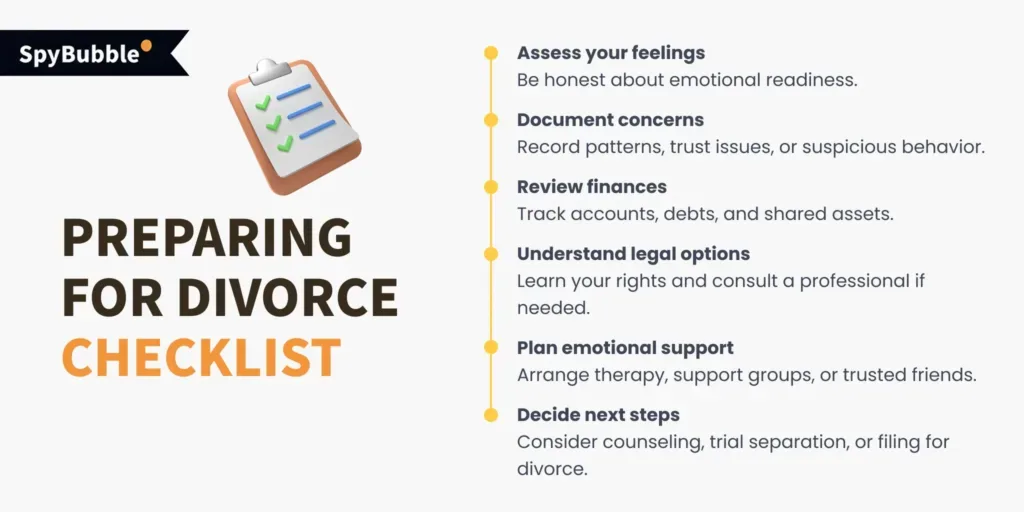
Thinking About Divorce: What to Consider First
Should I divorce my wife? Should I divorce my husband? There is no simple answer. When considering divorce, don’t rush. Step back and ask:
- Are problems situational (stress, work, external pressures) or recurring?
- Is there ongoing emotional or verbal abuse?
- Are trust or fidelity issues present (signs your husband is cheating / signs your wife is cheating)?
- Do you see genuine effort from your spouse to reconnect?
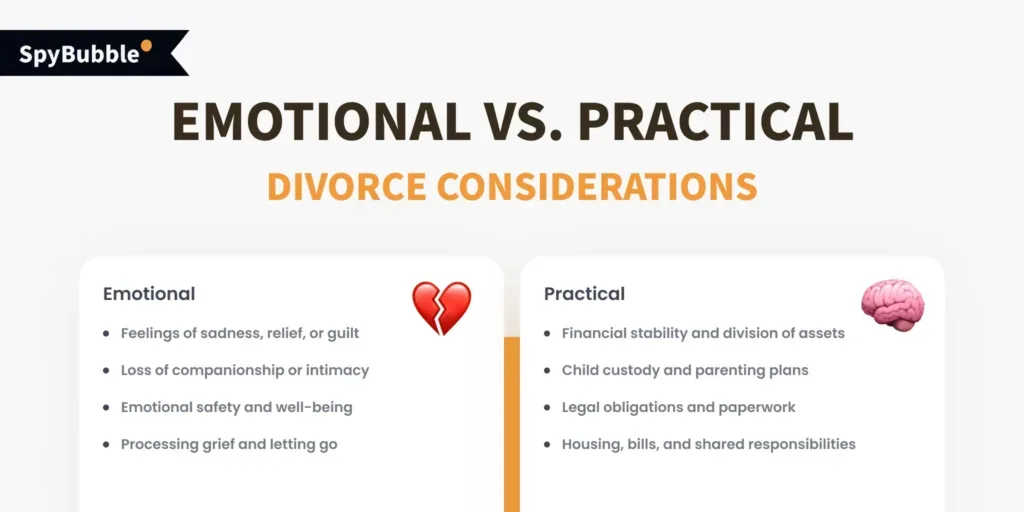
Understanding these points helps you separate temporary rough patches from real red flags. Clarity now prevents regret later. Thinking of divorcing your SO isn’t shameful. It’s part of taking responsibility for your life and happiness.
Getting the Clarity You Need Before Making Your Divorce Decision
Making a divorce decision without clear information can lead to regret, second-guessing, or even unnecessary pain.
Here’s how to gain real clarity:
- Observe repeated behaviors, not isolated incidents: One harsh argument, a late-night text, or a bad week doesn’t tell the whole story. Look for ongoing patterns like emotional distance, secretive phone use, or frequent lies.
- Document what you notice: Keep a private journal of concerning behaviors: missed commitments, unexplained absences, changes in intimacy, or financial secrecy. This record helps you see trends clearly and protects you if legal or emotional decisions arise.
- Separate fear from facts: Anxiety or gut feelings can feel urgent, but acting on them without proof can lead to mistakes. Distinguish between temporary frustrations and serious warning signs. For example, if you suspect infidelity, it’s worth understanding is adultery a crime in your jurisdiction and how that knowledge could affect your decisions.
- Consider all options: With verified information, you can explore counseling, trial separations, or full divorce with confidence. Knowing the truth helps you approach conversations calmly and reduces emotional escalation.
- Protect yourself: Understanding your spouse’s behavior objectively safeguards both your emotional well-being and practical matters like finances, custody, or household arrangements.
Taking these steps ensures your divorce decision is grounded in reality.
SpyBubble: Know the Truth Before You Decide

Suspecting your spouse of infidelity or hidden behavior while considering divorce can feel like walking on a tightrope. Sleepless nights, constantly replaying arguments, or feeling anxious about every interaction can drain your energy and cloud your judgment. Before making any life-changing decisions, it’s crucial to get the full picture.
SpyBubble helps you look into the facts discreetly so you can act on reality, not fear or guesswork. Here’s how it can help:
- Check fidelity concerns: Keep track of calls, messages, and hidden apps to see if your spouse is acting dishonestly. Knowing these patterns can help you understand what’s really going on (learn more about how a guy acts after he cheated).
- Document behavior for legal or personal clarity: Log repeated secrecy, unusual absences, or suspicious interactions. Having this record lets you back up your concerns and protects you if decisions need to be made.
- Monitor financial activity: Spot unexplained spending, hidden accounts, or sudden transfers. Money can be a huge red flag in troubled marriages, and having clear insight helps you stay ahead of surprises.
- Protect yourself during separation: Stay informed while maintaining safety and emotional balance.
How to catch a cheating wife or husband with SpyBubble?
- Choose the OS of your spouse’s phone.
- Select a preferred subscription plan.
- Install the app on their cell phone.
- Get the data in your user space.
Using SpyBubble isn’t about spying to hurt someone. It’s about finding the truth, getting a clear head, and taking control of your life. When you know the facts, you can face the next steps with confidence, whether it’s trying to rebuild trust, seeking counseling, or moving on safely.
Conclusion
Deciding whether to end a marriage is deeply personal. No one else can tell you the right answer. Whether your “Do I want a divorce” quiz results show serious issues or temporary struggles, honesty with yourself is key.
Tools like SpyBubble, counseling, and self-reflection give you the support needed to make informed, safe, and confident decisions.
Listen to your instincts, protect your emotional well-being, and remember: seeking clarity is not shameful. It’s empowering.
Take control of your future with confidence and peace of mind.

New posts


Most interesting
Leave a reply